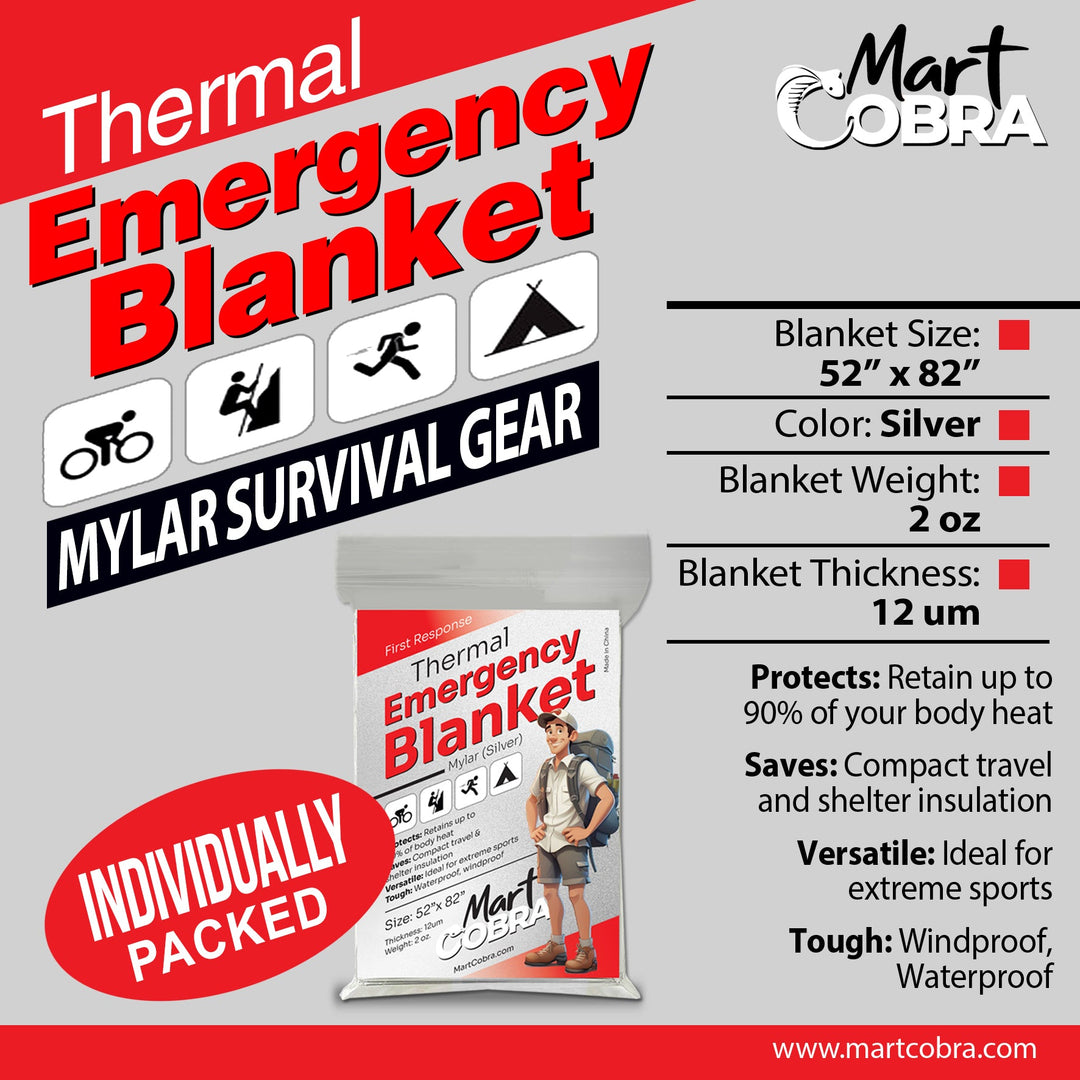
An emergency blanket is simple to use, but getting the most from one takes more than just unfolding it and throwing it over your shoulders.
These thin reflective blankets are designed toreduce heat loss, not generate heat. In a cold-weather emergency, the goal is to keep your existing clothing on, get out of wind and moisture when possible, wrap the blanket around your body, and combine it with whatever insulation and shelter you have available.
Here’s how to use an emergency blanket effectively—and what it can and cannot do.
How Does an Emergency Blanket Work?
Emergency blankets are thin sheets of plastic film with a reflective metallic surface. They are also commonly called Mylar blankets, space blankets, thermal blankets, or survival blankets.
They can reduce heat loss in several ways. The reflective surface can reduce radiant heat loss, while the thin film can also help limit heat loss from moving air and evaporation when used as a protective outer layer. Research on ultrathin reflective foils notes that in cold and windy conditions, their ability to act as a wind- and water-resistant outer covering can be particularly useful. [1]
They don't produce heat, however, and they contain almost none of the thick, air-trapping insulation found in a winter coat or traditional sleeping bag.
That's why an emergency blanket works bestwith dry clothing, insulation and shelter—not instead of them.
For a deeper explanation, seeHow Long Do Emergency Blankets Keep You Warm?.
How Do You Use an Emergency Blanket?
For basic cold-weather use:
- Keep your dry clothing on. Don't remove insulating layers just to put the emergency blanket closer to your skin.
- Get out of the wind and precipitation when possible. A vehicle, building or other safe shelter can provide much more protection than a blanket alone.
- Wrap the blanket around your torso and shoulders. Bring the sides around your body rather than simply draping it over your back.
- Reduce large openings. Tuck the blanket around yourself enough to limit drafts while keeping your face completely uncovered.
- Protect your head and neck with appropriate clothing. A hat, hood or other dry insulating layer can help reduce heat loss.
- Insulate yourself from the ground. If you're sitting or lying on a cold surface, use a sleeping pad, blanket, dry clothing or other suitable insulating material underneath you when available.
- Add more insulation if you have it. An emergency blanket should be one part of your cold-weather system rather than your only layer.

CDC cold-weather guidance similarly recommends moving someone who is becoming dangerously cold into shelter, removing wet clothing and warming them under dry layers of blankets and clothing. CDC
Which Side of an Emergency Blanket Goes Toward Your Body?
For a typical emergency blanket that looks silver on both sides,you do not need to worry about choosing a particular side.
Even with two-color reflective foils, the common advice that the silver side must always face your body in cold weather is an oversimplification.
A review published inWilderness & Environmental Medicine examined the physics and use of ultrathin reflective foils and concluded that, for protection against hypothermia in a wilderness emergency, it does not matter whether the gold or silver side faces outward. [1]PubMed
So rather than spending time deciding which surface faces inward, concentrate on what matters more:
- Keep insulating clothing on.
- Stay as dry as possible.
- Reduce exposure to wind.
- Wrap the blanket so it provides useful coverage.
- Add insulation underneath and around you.
If your particular blanket has manufacturer instructions specifying an orientation or a side designed for another purpose, follow those instructions.
Should an Emergency Blanket Go Over or Under Your Clothing?
Over your clothing is generally the practical choice in a cold-weather emergency.

Your clothes provide insulation by trapping air. The emergency blanket can then act as an additional outer layer that helps reduce heat loss and blocks moving air.
Don't strip off dry insulating clothing simply to put a reflective blanket directly against your skin.
This distinction matters because an emergency blanket has very little insulating thickness of its own. Research on reflective foils notes that thermal insulation depends heavily on trapped air and layers, while a reflective foil used by itself provides limited protection under demanding cold and windy conditions.PubMed
Think of the system this way:
Dry clothing = insulation
Emergency blanket = additional heat-loss barrier
Shelter = protection from the environment
Using them together is much more useful than expecting a thin emergency blanket to perform the job of all three.
How Should You Use an Emergency Blanket in Wind or Rain?
Wind can increase heat loss, so reducing exposure to it is important in cold conditions. The National Weather Service recommends staying out of the wind when possible and wearing warm, water-resistant layers during extreme cold.National Weather Service
An emergency blanket's thin plastic construction can provide an additional barrier against wind and moisture.
If you're caught outside:
- Move to safe shelter whenever possible.
- Keep dry insulating clothing underneath the blanket.
- Wrap the blanket around you rather than leaving it loose and flapping in the wind.
- Keep your face uncovered.
- Replace wet clothing with dry clothing when possible.
Don't intentionally rely on an emergency blanket as your primary shelter when a safer building, vehicle or purpose-built shelter is available.
Why Is Ground Insulation Important?
Wrapping yourself well doesn't eliminate heat loss into a cold surface beneath you.
If you're sitting or lying on cold ground, concrete, snow or another cold surface, putinsulating material between your body and that surface whenever possible.
A foam sleeping pad is an obvious choice outdoors, but in an emergency you may have other suitable dry insulating materials available.
The important distinction is that an emergency blanket itself is extremely thin. It can be part of your setup, but it shouldn't be confused with a thick insulating pad.
If you're preparing supplies ahead of time rather than improvising during an emergency, this is one reason it's useful to think about your entire kit instead of any single item. See ourFamily Emergency Kit Checklist andCar Emergency Kit Guide for broader preparedness lists.
What Are Common Emergency Blanket Mistakes?
One of the biggest mistakes is expecting an emergency blanket to function like a traditional insulated blanket or sleeping bag.
Avoid these common problems:
- Removing dry insulating clothing. Keep your warm layers on.
- Ignoring the wind. Get behind a windbreak or into safe shelter whenever possible.
- Sitting directly on a cold surface without insulation. Add insulating material underneath you.
- Leaving the blanket completely open. Wrap it around your body to reduce exposure and drafts.
- Covering your face. Keep your nose and mouth unobstructed.
- Depending on the blanket as your entire cold-weather system. Combine it with clothing, insulation and shelter.
- Assuming it actively warms you. It reduces heat loss; it doesn't create heat.
Most importantly, an emergency blanket isnot a substitute for medical treatment for hypothermia.
Warning signs of hypothermia in adults can include shivering, exhaustion, confusion, fumbling hands, memory loss, slurred speech and drowsiness. CDC advises seeking medical attention as soon as possible, and a body temperature below 95°F is a medical emergency.CDC
Can You Reuse an Emergency Blanket?
Sometimes.
If an emergency blanket has only been unfolded for practice and remains clean and undamaged, you can carefully fold it and store it again.
But these blankets are intentionally thin and compact, so inspect a used blanket before relying on it in an emergency kit. If it has significant tears, punctures or other damage, replacing it is the safer choice.
For emergency preparedness, keeping an unopened backup in your home, vehicle or go bag can also eliminate uncertainty about the condition of a previously used blanket.
TheMart Cobra Mylar Emergency Blanket is designed as a compact option for emergency kits, vehicles, outdoor gear and household preparedness.
Emergency Blanket vs. Emergency Sleeping Bag: Which Is Easier to Use?
Both use the same basic reflective concept, but their shapes are different.
An emergency blanket is aflat sheet. That makes it flexible: you can wrap it around yourself, drape it over existing layers or use it as part of an emergency setup.
An emergency sleeping bag uses anenclosed sack design. You get inside it, so there are fewer open edges to manage and it can be convenient when you're resting or staying in one place.
Neither design generates heat.
If you're deciding which format makes more sense for your kit, readEmergency Blanket vs. Emergency Sleeping Bag: What's the Difference?.
You can also see theMart Cobra Emergency Sleeping Bag.
What Else Can an Emergency Blanket Be Used For?
Warmth is the most familiar use, but the material has a few other straightforward emergency applications.
Visibility and signaling: A reflective blanket can create a large, conspicuous surface that may make you easier to see. Brightly colored versions can provide additional visual contrast.
Temporary weather barrier: The thin plastic sheet can help block wind or precipitation as part of an emergency setup, although it is not a replacement for proper shelter.
Keeping emergency supplies dry: Depending on the situation, the sheet can provide temporary protection from moisture for gear or supplies.
Ground barrier: It can provide a barrier between gear and a damp or dirty surface, although its thin material should not be treated as meaningful ground insulation by itself.
These secondary uses are helpful, but you don't need a list of elaborate "survival hacks" to justify carrying one. The biggest advantages of an emergency blanket are straightforward:it is compact, lightweight and gives you another way to reduce exposure and heat loss when conditions go wrong.
Where Should You Keep Emergency Blankets?
Emergency blankets take up little storage space, so it can make sense to keep them in more than one location.
Useful places include:
- Home emergency supplies
- Vehicle emergency kits
- Portable go bags
- Hiking or camping gear
- Workplace emergency supplies
The goal isn't to have one blanket stored somewhere you may not be able to reach. It's to have basic emergency supplies available where you are likely to need them.
For a broader look at what belongs alongside them, seeWhat Should You Keep in a Family Emergency Kit?.
Key Takeaways
- Emergency blanketsreduce heat loss; they don't generate heat.
- Keep dry insulating clothing on and use the emergency blanket as an additional outer layer.
- For typical emergency use, don't obsess over which reflective side faces your body.
- Wrap the blanket around yourself to reduce exposure while keeping your face uncovered.
- Protect yourself from wind and moisture and seek safe shelter whenever possible.
- Use actual insulating material between yourself and cold ground.
- Emergency blankets work best as one component of a larger clothing, shelter and preparedness system.
- If someone shows signs of hypothermia, seek medical attention promptly rather than relying on an emergency blanket alone.
References
- Zafren K, et al.Prehospital Use of Ultrathin Reflective Foils.Wilderness & Environmental Medicine. 2022.PubMedPubMed
- Centers for Disease Control and Prevention.Preventing Hypothermia.CDCCDC
- Centers for Disease Control and Prevention.Safety Guidelines: During & After a Winter Storm.CDCCDC
- National Weather Service.Cold Weather Safety.NWSNational Weather Service