A car emergency kit is a small, organized set of supplies that helps you handle a breakdown, a long delay, severe weather, or a cold-weather stranding until help arrives.
A well-stocked kit should cover the basics: water, shelf-stable food, first aid, lighting, backup power and communications, signaling, basic tools, weather protection, clothing, and emergency warmth.
The goal isn't to fill your trunk with gear. It's to keep the essentials you may actually need somewhere accessible in your vehicle.
Car Emergency Kit Checklist
Start with year-round essentials, then add cold-weather supplies based on where and when you drive.
| Keep Year-Round | Add for Winter & Cold Weather |
|---|---|
| Jumper cables | Ice scraper |
| Flashlight or headlamp + spare batteries | Cat litter or sand for traction |
| First aid kit | Warm gloves and hat |
| Cell phone charger + power bank | Extra warm clothing/layers |
| Reflective triangle or road flares | Compact shovel |
| Water + shelf-stable food | Mylar emergency blanket |
| Work gloves | Mylar emergency sleeping bag |
| Reflective safety vest | Additional cold-weather supplies |
| Basic vehicle tools/supplies | — |
| Paper map | — |
Your exact kit should match your climate, commute, passengers, and the conditions in which you regularly drive.
What Should Go in a Basic Car Emergency Kit?
A basic car emergency kit should start with core year-round supplies. Ready.gov's car-safety guidance includes items such as jumper cables, flares or a reflective triangle, an ice scraper, a car cell-phone charger, a blanket, a map, and traction material such as cat litter or sand.
A practical core kit can include:
- Jumper cables
- Flares or a reflective triangle
- Cell phone charger
- Flashlight or headlamp with spare batteries
- First aid kit with bandages, gauze, adhesive tape, antiseptic supplies, and any personal medications you may need
- Work gloves
- Reflective safety vest
- Nylon tow strap
- Waterproof patch and seal tape
- Shelf-stable snacks and bottled water
- Blanket
- Paper map
For winter and cold-weather driving, consider adding:
- Ice scraper
- Compact Shovel
- Cat litter or sand for tire traction
- Extra emergency warmth supplies
- Warm gloves, hat, and additional clothing layers
Think of this as a starting framework rather than a fixed shopping list. Your kit should reflect your climate, commute, passengers, and the conditions in which you normally drive.

Why Do Water, Food, and First Aid Matter?
A breakdown or road closure can turn a short drive into hours of waiting. Water, shelf-stable food, and basic first-aid supplies help you handle delays, minor injuries, and situations where reaching assistance takes longer than expected.
Emergency preparedness guidance commonly includes food, water, and first-aid supplies as core emergency-kit items.
Practical additions can include shelf-stable snacks, several bottles of water, a compact first-aid kit, and any personal medications a passenger may need.
Check expiration dates and follow manufacturer guidance for food, water, medications, and other items rather than assuming something can remain in a vehicle indefinitely.
What Lighting, Power, and Communication Gear Belongs in a Vehicle?
A flashlight or headlamp, spare batteries, a cell-phone charger, a charged power bank, and a written emergency contact list can all be useful additions to a vehicle emergency kit.
A headlamp can be especially useful because it leaves both hands free if you need to inspect something in or around your vehicle after dark.
A charged power bank gives you another way to keep a phone working when the vehicle cannot provide power.
A paper map is also worth considering. Navigation shouldn't depend entirely on a single device.
Store lighting and communication supplies somewhere secure and reasonably accessible so you can reach them when needed.
How Do Signaling and Visibility Items Help in a Breakdown?
If your vehicle is disabled, being visible to other drivers can be critical—especially at night, in rain, during snow, or on the shoulder of a busy road.
Useful visibility and signaling equipment can include:
- Reflective warning triangles
- Road flares
- Reflective safety vest
- Vehicle hazard lights
Ready.gov includes reflective triangles or flares in its vehicle emergency guidance, while AAA also recommends visibility equipment for roadside emergencies.
Where you position yourself after a breakdown matters, too. If a power line has fallen on your vehicle, Ready.gov advises staying inside until a trained person removes the wire.
What Basic Tools and Supplies Should Stay in the Trunk?
A few compact supplies can help with common roadside problems without turning your trunk into a full workshop.
Consider keeping:
- Jumper cables
- Tow strap
- Work gloves
- Waterproof patch and seal tape
- Tire-pressure gauge
- Traction material for snow or ice
Ready.gov includes jumper cables and traction material in its car-kit guidance, while AAA highlights items such as a tow strap and work gloves.
Keeping your gas tank from running extremely low is also useful preparedness. Ready.gov notes that a fuller tank can help prevent the fuel line from freezing during severe cold.
How Should You Prepare Your Car for Winter and Cold-Weather Driving?
Cold-weather preparation involves both your vehicle and the supplies inside it.
Ready.gov recommends having a mechanic check important vehicle systems such as antifreeze levels, battery and ignition systems, brakes, exhaust, heater and defroster, lights, thermostat, and windshield-wiper equipment.
The National Weather Service also recommends building an emergency winter supply kit for your vehicle and avoiding cruise control when driving on slippery, icy, or snowy roads.
These winter-specific supplies can be added to your core year-round car emergency kit as conditions require.
Are Mylar Emergency Blankets and Emergency Sleeping Bags Useful in a Car?
A Mylar emergency blanket or emergency sleeping bag can be a useful addition to a car emergency kit because both are compact and lightweight, help reduce radiant body heat loss, and can provide a barrier against wind and moisture.
However, they work differently.
A flat Mylar emergency blanket is extremely compact and versatile. It can be wrapped or draped around the body and takes up very little storage space.
An enclosed Mylar emergency sleeping bag surrounds more of the body with fewer exposed edges, providing more complete body coverage.

Reflective Mylar helps reduce radiant body heat loss. It does not generate heat and is not insulation by itself. Mylar material can provide a barrier against wind and moisture, but overall protection depends on coverage, conditions, and how the product is used.
Reflective emergency gear also doesn't replace appropriate clothing, insulation, shelter, or other cold-weather preparation.
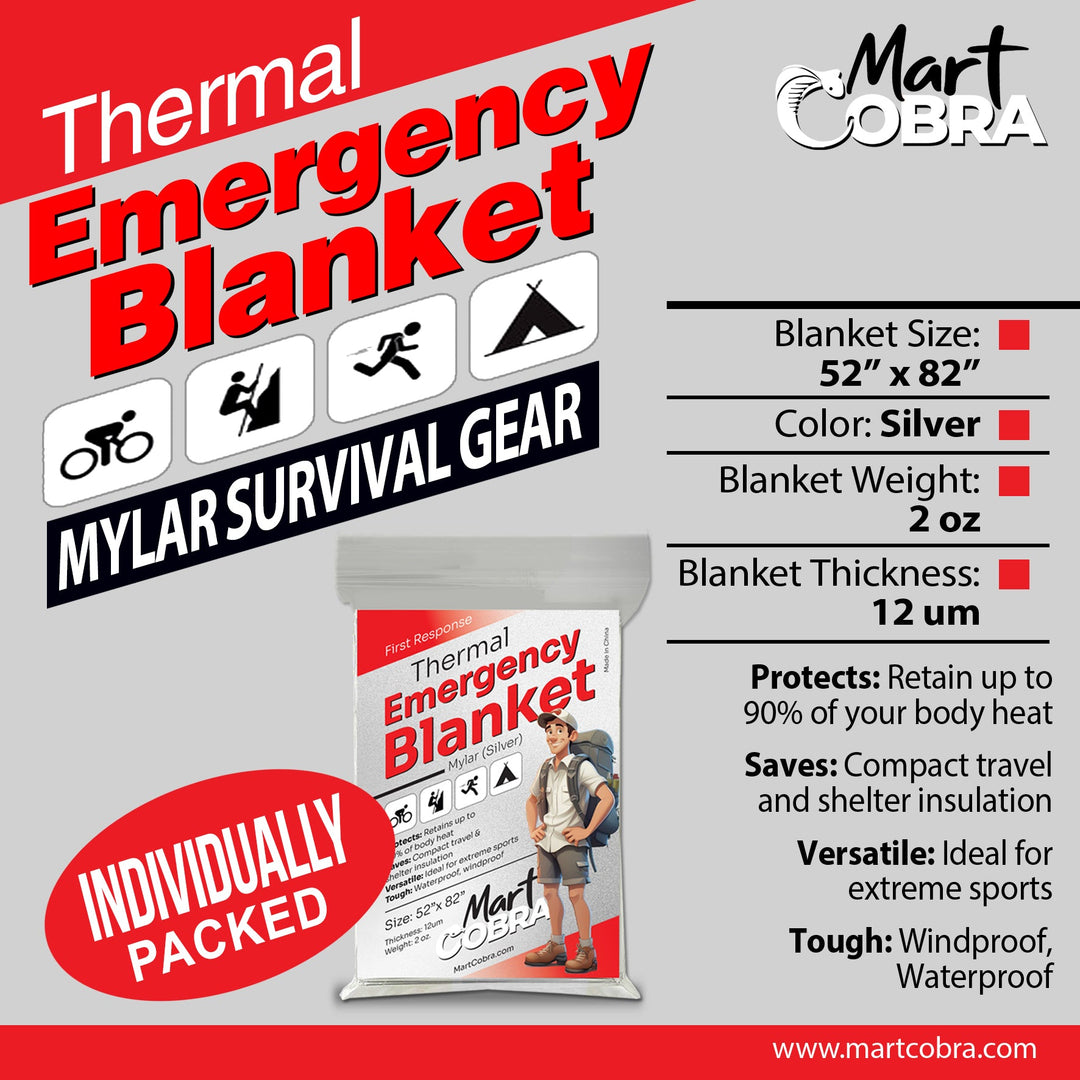
The Mart Cobra Mylar Emergency Blanket provides 82" × 52" full-body coverage and folds smaller than a deck of cards. Multi-packs are available for keeping emergency blankets in multiple vehicles, kits, go bags, and other locations.
The Mart Cobra Emergency Sleeping Bag uses an enclosed Mylar design with approximately 7' × 3' full-body coverage. It weighs under 5 oz. and packs smaller than a soda can, making it compact enough to store in a vehicle emergency kit.
When using an emergency sleeping bag, keep your head outside the bag.
Preparing your vehicles for cold-weather emergencies?
Shop Mart Cobra Mylar Emergency Blankets or see the Mart Cobra Emergency Sleeping Bag.
How Do You Organize, Store, and Maintain a Car Emergency Kit?
Having emergency supplies doesn't help much if you can't find them when you need them.
Use a sturdy bag or container and group similar items together. Keep the most critical supplies somewhere accessible from the driver's seat rather than underneath luggage or deep in the trunk.
Think about whether each item is appropriate for long-term vehicle storage. Food, water, batteries, medications, and electronics can all have specific storage requirements.
Follow manufacturer guidance rather than assuming something can tolerate prolonged heat or cold inside a vehicle.
A practical habit is to inspect your kit periodically and before long road trips. Check:
- Food and medication expiration dates
- Battery condition
- Power-bank charge
- Flashlight operation
- First-aid supplies
- Water containers
- Clothing and warmth supplies
- Overall condition of emergency equipment
Replace damaged, expired, or depleted items as needed.
Key Takeaways
- A useful car emergency kit covers water and shelf-stable food, first aid, lighting, backup power and communications, signaling, basic tools, weather protection, clothing, and emergency warmth.
- Keep core supplies in your vehicle year-round and add weather-specific equipment when conditions require it.
- Signaling and visibility equipment can help make you and your disabled vehicle easier for other drivers to see.
- Winter preparation includes both emergency supplies and maintaining critical vehicle systems.
- Reflective Mylar helps reduce radiant body heat loss but does not generate heat or provide insulation by itself.
- A flat Mylar emergency blanket is extremely compact and versatile, while an enclosed Mylar emergency sleeping bag provides more complete body coverage with fewer exposed edges. Both can serve different roles in a vehicle emergency kit.
- Keep emergency supplies organized and accessible, and follow manufacturer guidance for storage, expiration dates, and replacement.