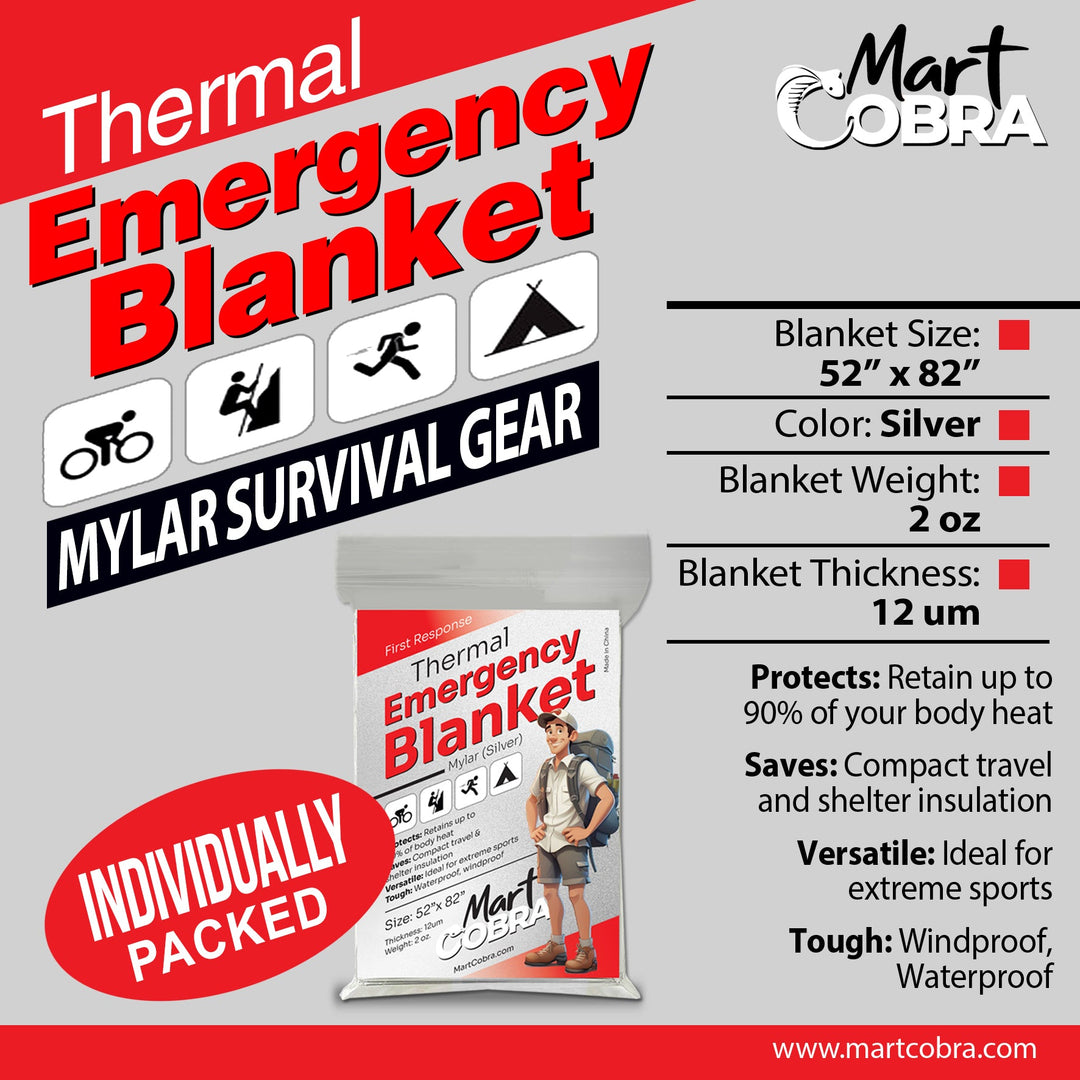
If you're comparing aMylar blanket vs. a space blanket, the short answer is simple:in everyday emergency-preparedness use, they usually mean the same thing.
Both names commonly describe the thin, lightweight, reflective emergency blankets found in first-aid kits, vehicle emergency kits, hiking packs, and disaster-preparedness supplies.
There is one important technical distinction.Mylar is a trade name for a type of polyester film, whilespace blanket is a general name for the finished emergency product. That means not every product marketed as a space blanket necessarily uses genuine Mylar-brand film.
For most people choosing emergency gear, however, the termsMylar blanket,space blanket,emergency blanket, andthermal blanket refer to the same general category of product.
Why Are They Called Space Blankets?
The name has a real connection to the space program.
According toNASA, space blankets—also known as emergency blankets—were first developed by NASA in 1964. NASA describes the material as metallized polyethylene terephthalate (PET): an extremely thin plastic film coated with aluminum or another metal.

NASA also explains thatMylar is a trade name for a thin polyester film developed by DuPont. Reflective materials like aluminized Mylar became important in space applications because they could help control radiant heat while remaining extremely lightweight.
Those same characteristics eventually made the technology useful far beyond spacecraft. Today, reflective emergency blankets are commonly found in emergency kits, first-aid supplies, outdoor gear, and other preparedness equipment.
How Does a Mylar Space Blanket Help Keep You Warm?
A Mylar emergency blanketdoesn't create heat. Instead, it can help reduce ways your body loses the heat it is already producing.
The reflective metallic surface can reduce radiant heat transfer, while the thin film can also provide a barrier against wind and moisture.
That distinction matters.
Emergency blankets are frequently marketed around the amount of body heat they can supposedly reflect, but real-world thermal protection is more complicated than a single percentage.
A 2022 review published inWilderness & Environmental Medicine found that ultrathin reflective foils provide very little insulation by themselves because they don't contain the thick layers of trapped air found in insulated clothing or sleeping bags. The researchers noted that in cold and windy conditions, reflective foil may be particularly useful as a waterproof outer covering.
So think of an emergency blanket asone layer of an emergency warmth system, not as a replacement for appropriate clothing, insulation, shelter, or a temperature-rated sleeping bag.
Are Mylar Blankets Waterproof and Windproof?
The thin plastic film used in a typical emergency blanket can create a barrier against wind and liquid water.
That can be useful because staying dry and reducing exposure to moving air are important parts of limiting heat loss in cold environments.
A review of rescue blankets published in theInternational Journal of Environmental Research and Public Health describes their ability to reduce heat loss through convection, conduction, evaporation, and thermal radiation. The researchers also highlighted their low weight and extremely compact size as important advantages for emergency and wilderness use.
The Wilderness Medical Society's guidelines for accidental hypothermia similarly emphasize the importance of insulation and protection from environmental conditions when preventing and treating cold exposure.
How Small Are Mylar Emergency Blankets?
One of the biggest advantages of an emergency blanket isn't sophisticated insulation. It'show much coverage can fit into such a small package.

A full-size emergency blanket can fold into a package small enough to keep in places where carrying a traditional blanket would be impractical.
That makes them particularly useful for:
-
Vehicle emergency kits
-
Home emergency supplies
-
Hiking and camping packs
-
Go bags and evacuation kits
-
RVs
-
Workplace emergency kits
-
First-aid kits
Their low weight and small packed size also make it practical to store multiple blankets for families or groups rather than relying on a single blanket.
If you're building out supplies specifically for your vehicle, see our guide towhat you should keep in a car emergency kit for a more complete checklist beyond emergency warmth.
What Are the Limitations of a Mylar Space Blanket?
Emergency blankets are useful precisely because they're thin and lightweight, but those same characteristics create limitations.
They provide very little insulation on their own
Traditional insulation works largely by trapping layers of air. A thin emergency blanket has essentially no insulating loft, so it should not be treated like a conventional blanket or cold-weather sleeping bag.
Thin emergency blankets can tear
Lightweight film can be punctured or torn by sharp objects, branches, rough surfaces, or aggressive handling. Keeping the blanket folded in its original packaging until it's needed can help protect it while stored.
A flat blanket has open edges
Unlike an enclosed sleeping system, a flat sheet can allow wind and moisture to enter around its edges if it isn't positioned carefully.
These limitations don't make emergency blankets ineffective. They explain why the product works best ascompact backup emergency gear rather than a substitute for a complete cold-weather system.
Mylar Emergency Blanket vs. Emergency Sleeping Bag
Another option is anemergency sleeping bag made from reflective Mylar material.
The underlying idea is similar, but the shape is different.
AMart Cobra Mylar Emergency Blanket is a flat reflective sheet. That makes it highly compact and gives you flexibility in how you position it around the body.
AMart Cobra Mylar Emergency Sleeping Bag uses anenclosed sack design. Instead of wrapping a flat sheet around yourself, you climb inside the reflective shell.
The enclosed design reduces the number of exposed edges and makes it easier to keep the material positioned around the body while resting.
Neither option should be confused with an insulated, temperature-rated sleeping bag. The choice is primarily between the versatility of a flat emergency blanket and the more enclosed coverage of an emergency sleeping bag.
If you're deciding between the two for your emergency supplies, we've put together a more detailed comparison of anemergency blanket vs. emergency sleeping bag, including where each design makes the most sense.
Where Should You Keep Emergency Blankets?
The best emergency blanket is the one that's actually available when something goes wrong.
Because they take up so little room, it makes sense to store them where an unexpected delay, evacuation, power outage, or exposure to cold weather could leave you without normal shelter or heating.
Practical locations include:
-
Your vehicle emergency kit
-
Home emergency supplies
-
Hiking or camping packs
-
Go bags and evacuation kits
-
RVs
-
Workplace emergency supplies
For families, consider the number of people who may need emergency coverage at the same time. The small size and weight of Mylar blankets make storing multiple blankets relatively easy.
Mylar Blanket vs. Space Blanket: The Bottom Line
Mylar blanket and space blanket generally describe the same type of reflective emergency blanket.
The difference is mostly terminology:Mylar originated as a trade name for polyester film, whilespace blanket became a common name for lightweight reflective emergency blankets associated with technology developed for the space program.
More important than the name is understanding what the product can—and can't—do.
Emergency blankets are extremely compact, lightweight barriers that can help reduce several forms of body heat loss. But because the material itself provides very little insulating loft, they work best as part of a broader emergency-preparedness system rather than as a replacement for proper clothing, shelter, or insulated sleeping equipment.
For something that takes up so little room, that's exactly what makes the space blanket useful:it's easy to have with you before you know you're going to need it.
Key Takeaways
-
Mylar blanket and space blanket usually mean the same thing in everyday emergency-preparedness terminology.
-
Mylar is technically a trade name for polyester film, while space blanket is a general product term.
-
Emergency blanketsdo not generate heat; they can help reduce several forms of body heat loss.
-
The material hasvery little insulating loft, so an emergency blanket does not replace insulated clothing, shelter, or a temperature-rated sleeping bag.
-
Their biggest practical advantages arelow weight, small packed size, and protection from wind and moisture.
-
A flat emergency blanket provides flexible coverage, while aMylar emergency sleeping bag uses an enclosed sack design with fewer exposed edges.