A family emergency kit is a collection of supplies your household can rely on when a disaster disrupts electricity, water, transportation, communications, or access to stores.
A useful kit isn't just a box of random survival gear. It should cover the essentials your family may need during the first days of an emergency:water, food, first aid, medications, communications, lighting, backup power, important documents, hygiene, and warmth.
The American Red Cross recommends planning forone gallon of water per person per day, with athree-day supply for evacuation and a two-week supply for home. It recommends similar three-day and two-week targets for non-perishable food.
Beyond those basics, the right emergency kit depends on your household. Children, older adults, pets, medical needs, climate, and where you live should all influence what you pack.
What Should Be in a Family Emergency Kit?
A well-rounded family emergency kit should cover these major categories:
- Water
- Non-perishable food
- First aid supplies
- Prescription medications and medical necessities
- Flashlights and backup lighting
- Emergency radio
- Batteries and portable chargers
- Personal hygiene and sanitation supplies
- Important documents and emergency contacts
- Cash
- Maps
- Warm clothing and emergency warmth supplies
- Supplies for children, older adults, and pets

Ready.gov also recommends considering more than one kit: a primary home kit plus smaller portable supplies for places such as your workplace and vehicle.
The goal isn't to prepare for every imaginable scenario. It's to make sure your family can meet its most important needs if normal services suddenly aren't available.
How Much Water and Food Does a Family Emergency Kit Need?
Water should be one of the first things you plan.
The CDC recommends storingat least one gallon of water per person per day for three days. That water isn't just for drinking—it may also be needed for cooking, brushing teeth, and other basic uses.
If possible, the CDC recommends considering a two-week supply.
For a family of four, that means at least:
12 gallons of water for three days
For a longer stay-at-home supply, that requirement grows quickly, which is one reason water storage deserves more planning than simply throwing a few bottles into a go bag.
Households may also need additional water depending on health needs, pregnancy or nursing, pets, climate, and other circumstances.
For food, choosenon-perishable, easy-to-prepare items your family will actually eat. The Red Cross recommends three days of food for evacuation and two weeks for home.
Useful options can include canned foods, shelf-stable meals, dried foods, protein bars, nut butters, crackers, and other foods that don't require refrigeration.
If you're packing canned food, include a manual can opener.
Try not to build an emergency food supply entirely around foods that require large amounts of water or complicated cooking. During some emergencies, both clean water and a reliable cooking method may be limited.
What First Aid and Medication Supplies Should You Include?
Every family emergency kit should contain abasic first aid kit for dealing with minor injuries until additional help is available.
That can include:
- Adhesive bandages
- Sterile gauze
- Medical tape
- Antiseptic supplies
- Non-latex gloves
- Scissors
- Basic first aid instructions
Medication planning is equally important.
The American Red Cross recommends aseven-day supply of medications and medical items in its general survival-kit checklist.
Your family's needs may go beyond prescription medications. Think about eyeglasses, contact lenses, hearing-aid batteries, inhalers, medical equipment, and other items someone in the household relies on.
Keep an updated list of medications, dosages, allergies, and important medical information with your emergency documents.
What Do You Need for Communications, Lighting, and Backup Power?
A power outage can turn ordinary items such as phones and household lighting into limited resources.
Ready.gov recommends abattery-powered or hand-crank radio, flashlight, extra batteries, and a whistle for signaling for help as basic emergency supplies.
For a family kit, consider keeping:
- Flashlights or headlamps
- Spare batteries
- Battery-powered or hand-crank radio
- Portable phone power banks
- Charging cables
- Vehicle charger
- Whistle
- Written emergency contact information
Don't rely entirely on the contact list stored in your phone.
Keep important phone numbers written down in case a phone is lost, damaged, or runs out of power.
A NOAA Weather Radio can also provide important weather and emergency information when other communication methods are unavailable.
What Documents and Personal Items Should You Pack?
Some of the most important emergency supplies aren't survival tools at all.
The Red Cross recommends including copies of important personal documents, such as medical information, proof of address, passports, birth certificates, and insurance policies.
It also recommends emergency contact information, extra cash, and local maps.
Consider keeping copies of:
- Identification
- Insurance information
- Medical and prescription information
- Birth certificates or other vital records
- Emergency contacts
- Important account and policy information
- Local maps
Protect paper documents from water by storing them in a waterproof pouch or sealed container.
Secure digital backups can provide another layer of protection.
Small bills can also be useful during prolonged power or communications outages when electronic payment systems may not be available.
How Should You Plan for Warmth in a Family Emergency Kit?
Warmth can become a serious concern duringwinter storms, extended power outages, evacuations, or vehicle emergencies.
The National Weather Service warns that prolonged exposure to cold can lead to hypothermia and recommends appropriate clothing, layers, and blankets during extreme cold.
Your emergency supplies should therefore include appropriate clothing and a way to reduce heat loss.
One compact option is aMylar emergency blanket.
Unlike an insulated blanket, Mylar doesn't generate heat and provides very little insulation by itself. Its usefulness comes primarily from helping reduce radiant heat loss and providing a barrier against wind and moisture.
For a deeper explanation, seeHow Long Do Emergency Blankets Keep You Warm?
Because they fold extremely small, emergency blankets can be distributed across several locations rather than kept only in one large home kit.
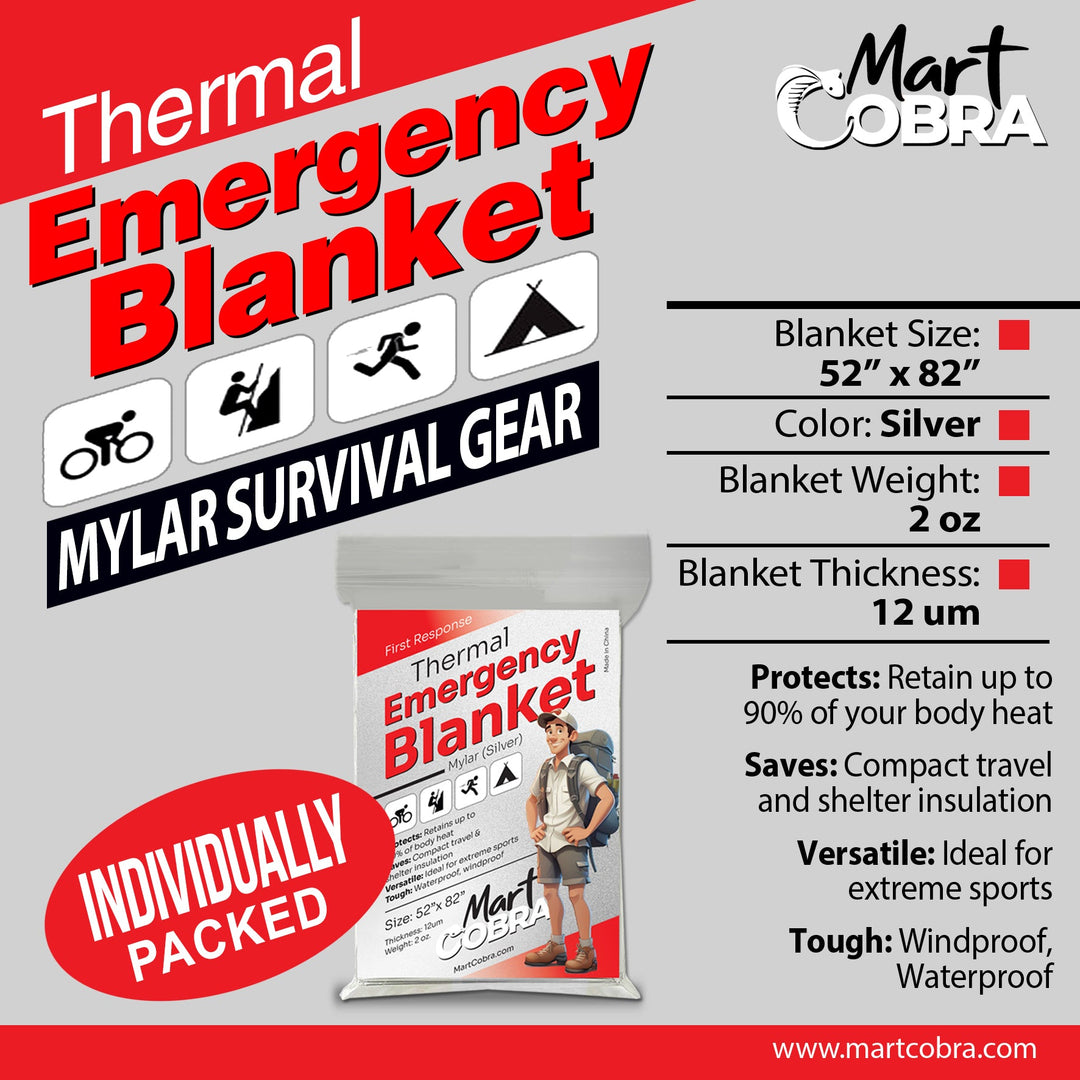
TheMart Cobra Mylar Emergency Blanket is designed as a compact option for emergency kits, vehicles, go bags, and other preparedness supplies.
Emergency Blanket or Emergency Sleeping Bag?
A flat emergency blanket and a Mylar emergency sleeping bag use similar reflective-material principles, but their shapes are different.
An emergency blanket is aflat reflective sheet that can be wrapped around the body or used in several different emergency configurations.
An emergency sleeping bag uses anenclosed sack design, which provides wraparound coverage with fewer exposed edges and can stay positioned around the body more easily while someone is resting or stationary.
Neither should be confused with a temperature-rated insulated sleeping bag.
We explain the differences in more detail inEmergency Blanket vs. Emergency Sleeping Bag: What's the Difference?
For families that want the enclosed format in their emergency supplies, theMart Cobra Emergency Sleeping Bag provides approximately 7 × 3 feet of coverage while packing into a compact size.
You may also see emergency blankets calledspace blankets. If you're wondering whether those are actually different products, seeMylar Blanket vs. Space Blanket: What's the Difference?
Most importantly, don't treat reflective material as a replacement for proper insulation.
In severe cold, use appropriate clothing, conventional insulated blankets or sleeping bags, shelter, and insulation from the ground whenever available.
What Should You Pack for Children, Older Adults, and Pets?
A generic emergency checklist is only the starting point. Your kit needs to account for the people who will actually use it.
For Babies and Children
- Formula and bottles
- Baby food
- Diapers and wipes
- Necessary medications
- Extra clothing
- Comfort items
- Small games, books, or activities
For Older Adults or People With Medical Needs
- Prescription medications
- Eyeglasses
- Hearing-aid batteries
- Mobility equipment
- Medical-device power requirements
- Written medication and dosage information
- Emergency caregiver contacts
For Pets
- Pet food
- Water
- Collar and leash
- Identification
- Carrier
- Food and water bowls
- Necessary medications
- A current photo in case you become separated
Don't forget to include your pets when calculating how much emergency water your household needs.
Should You Keep One Emergency Kit or Several?
For most families,one kit isn't enough.

Your largest supply can stay at home, where weight and size matter less. But an emergency may happen while you're at work, traveling, or away from the supplies stored in your house.
A practical approach is to divide preparedness among several locations:
Home Kit
Your largest supply of water, food, medical necessities, sanitation items, lighting, warmth, and other essentials.
Go Bag
A smaller portable kit containing the essentials you'd need if you had to leave home quickly.
Vehicle Kit
Supplies appropriate for being stranded or encountering an emergency away from home.
Work Kit
A smaller collection of essentials in case you can't immediately return home.
Ready.gov recommends considering supplies for home, work, and vehicles rather than relying entirely on a single kit.
For a more detailed vehicle checklist, seeWhat Should You Keep in a Car Emergency Kit?
How Should You Store and Maintain a Family Emergency Kit?
An emergency kit only works if its contents are usable when you need them.
Keep supplies organized in durable containers that are easy to access.
A larger plastic bin can work well for home supplies, while a backpack or duffel can make an evacuation kit easier to carry.
Then make checking the kit part of your normal household routine.
At least once a year:
- Check expiration dates on food and medications
- Inspect stored water
- Test flashlights and radios
- Check batteries and power banks
- Update emergency contacts
- Update medical information
- Check children's clothing sizes
- Replace anything that has been used or damaged
- Reconsider whether your family's needs have changed
Some individual supplies may need to be checked or replaced more frequently according to their labels or manufacturer's storage instructions.
The important thing is not to build the kit once and forget about it.
Family Emergency Kit Checklist
Water & Food
- Water
- Non-perishable food
- Manual can opener
- Basic eating utensils if needed
Health & First Aid
- First aid kit
- Prescription medications
- Medical supplies
- Medication and allergy information
Power & Communications
- Flashlights or headlamps
- Emergency radio
- Extra batteries
- Power banks and charging cables
- Whistle
- Written emergency contacts
Documents & Money
- Copies of important documents
- Insurance information
- Identification
- Local maps
- Cash in small bills
Warmth & Clothing
- Weather-appropriate clothing
- Warm blankets or sleeping bags
- Emergency blankets
- Emergency sleeping bags, if appropriate for your kit
- Sturdy shoes
Sanitation
- Toilet paper
- Wipes
- Garbage bags
- Personal hygiene supplies
Family-Specific Supplies
- Baby and child supplies
- Medical or accessibility supplies
- Pet food and water
- Pet leash, collar, identification, carrier, and bowl
- Comfort or activity items for children
Key Takeaways
- A family emergency kit should be designed around your household rather than copied blindly from a generic checklist.
- Start withwater, food, medications, first aid, lighting, communications, sanitation, important documents, and warmth.
- Plan around at leastone gallon of water per person per day.
- The Red Cross recommends enough water and food forthree days during an evacuation and two weeks at home.
- Keep supplies in more than one useful location, including home, go bag, vehicle, and workplace kits.
- Review your supplies regularly as medications, clothing sizes, pets, medical needs, emergency contacts, and other circumstances change.
References
American Red Cross — Survival Kit Supplies
https://www.redcross.org/get-help/how-to-prepare-for-emergencies/survival-kit-supplies.html
Ready.gov — Build a Kit
https://www.ready.gov/kit
CDC — How to Create and Store an Emergency Water Supply
https://www.cdc.gov/water-emergency/about/how-to-create-and-store-an-emergency-water-supply.html
CDC — Emergency Preparedness for Families, Infants and Children
https://www.cdc.gov/children-and-school-preparedness/
National Weather Service — Cold Weather Safety
https://www.weather.gov/safety/cold