If you're wonderinghow long an emergency blanket will keep you warm, there isn't a reliable answer in hours.
A Mylar emergency blanket doesn't generate heat. Instead, it helpsslow the loss of heat your body is already producing. How long that protection is useful depends on the temperature, wind, moisture, your clothing, insulation from the ground, your physical condition, and how the blanket is being used.
That means an emergency blanket doesn't have a meaningful rating like "keeps you warm for 6 hours" or "works for 12 hours."
In some situations, it may help you conserve body heat while you wait for assistance. In severe cold, wind, or wet conditions, a thin reflective blanket by itself may provide nowhere near enough protection.
The better question is:how does an emergency blanket slow heat loss, and how can you use one more effectively?
How Does an Emergency Blanket Help Keep You Warm?
Your body can lose heat through several mechanisms, including radiation, convection, conduction, and evaporation.
A reflective emergency blanket can help reduce more than one of them.
The metallized surface reduces radiant heat transfer, while the thin, impermeable material can also provide protection against wind and moisture.
A 2022 review of rescue blankets published in theInternational Journal of Environmental Research and Public Health describes rescue blankets as helping reduce heat loss throughconvection, conduction, evaporation, and thermal radiation.
But there's an important limitation: a thin Mylar blanket contains almost no insulating loft.

Traditional cold-weather clothing, blankets, and sleeping bags trap layers of air to provide insulation. An ultrathin emergency blanket doesn't work the same way.
That's why an emergency blanket is best thought of as aheat-loss barrier and emergency backup layer, not as a replacement for proper clothing, shelter, ground insulation, or a temperature-rated sleeping bag.
If you want to learn more about the material itself, our guide toMylar blankets vs. space blankets explains how the reflective material works and where the terminology comes from.
Why Can You Still Feel Cold Under an Emergency Blanket?
Being wrapped in reflective material doesn't guarantee you'll feel warm.
That's because radiation is only one way the human body loses heat.
Wind still matters
Moving air increases convective heat loss. An emergency blanket can provide a wind barrier, but large openings or a blanket that repeatedly blows away from the body reduce that protection.
The ground still matters
If you're sitting or lying on a cold surface, your body can lose heat through direct contact with that surface.
An emergency blanket is extremely thin and provides very little cushioning or insulating loft. Additional insulation between you and cold ground can therefore be important.
Wet conditions still matter
Cold and wet environments substantially increase the risk of hypothermia. The Wilderness Medical Society identifies cold and wet environments as particularly important risk factors for accidental hypothermia.
The emergency blanket itself can act as a moisture barrier, but it doesn't magically make wet clothing underneath it dry.
Your clothing still matters
An emergency blanket works differently from insulated clothing.
Dry insulating layers help trap warm air close to your body, while the emergency blanket can provide an additional barrier against environmental heat loss.
In cold conditions, these approaches complement each other rather than replace one another.
So, How Long Can You Use an Emergency Blanket?
There'sno fixed time limit after which an emergency blanket suddenly stops working.
The material doesn't run out of heat because it isn't producing heat in the first place.
As long as the blanket remains intact and properly positioned, it can continue acting as a reflective, wind-resistant, and moisture-resistant barrier.
What changes isyour body's ability to remain warm under the conditions you're facing.
Someone wearing dry winter clothing inside a sheltered vehicle faces a completely different situation from someone wearing wet clothing outdoors in freezing temperatures and high wind.
That's why a responsible emergency blanket manufacturer can't tell you that a blanket will "keep you warm for X hours."
Environmental conditions matter far more than the clock.
How Can You Make an Emergency Blanket More Effective?
The goal is to reduce as many pathways of heat loss as practical rather than relying solely on the reflective surface.
Protect yourself from wind
Use available shelter whenever possible. A vehicle, building, tent, or other appropriate windbreak can dramatically change the conditions you're facing.
Stay as dry as possible
Wet conditions can accelerate heat loss. Protect yourself from additional moisture and replace wet clothing with dry layers when doing so is possible and safe.
Insulate yourself from cold ground
Don't assume a thin sheet of Mylar replaces ground insulation.
When you're sitting or lying down, appropriate insulating material underneath you can help reduce conductive heat loss.
Keep your insulating layers
An emergency blanket generally supplements clothing and insulation rather than replacing them.
Dry layers underneath provide insulation that the extremely thin Mylar material itself doesn't have.
Reduce unnecessary openings
A flat emergency blanket has open edges. Positioning it so that unnecessary gaps are minimized can help reduce exposure to moving air while still allowing safe breathing and movement.
How Does an Emergency Sleeping Bag Compare?
A flat emergency blanket and a Mylar emergency sleeping bag use similar reflective-material principles, but their shapes are different.

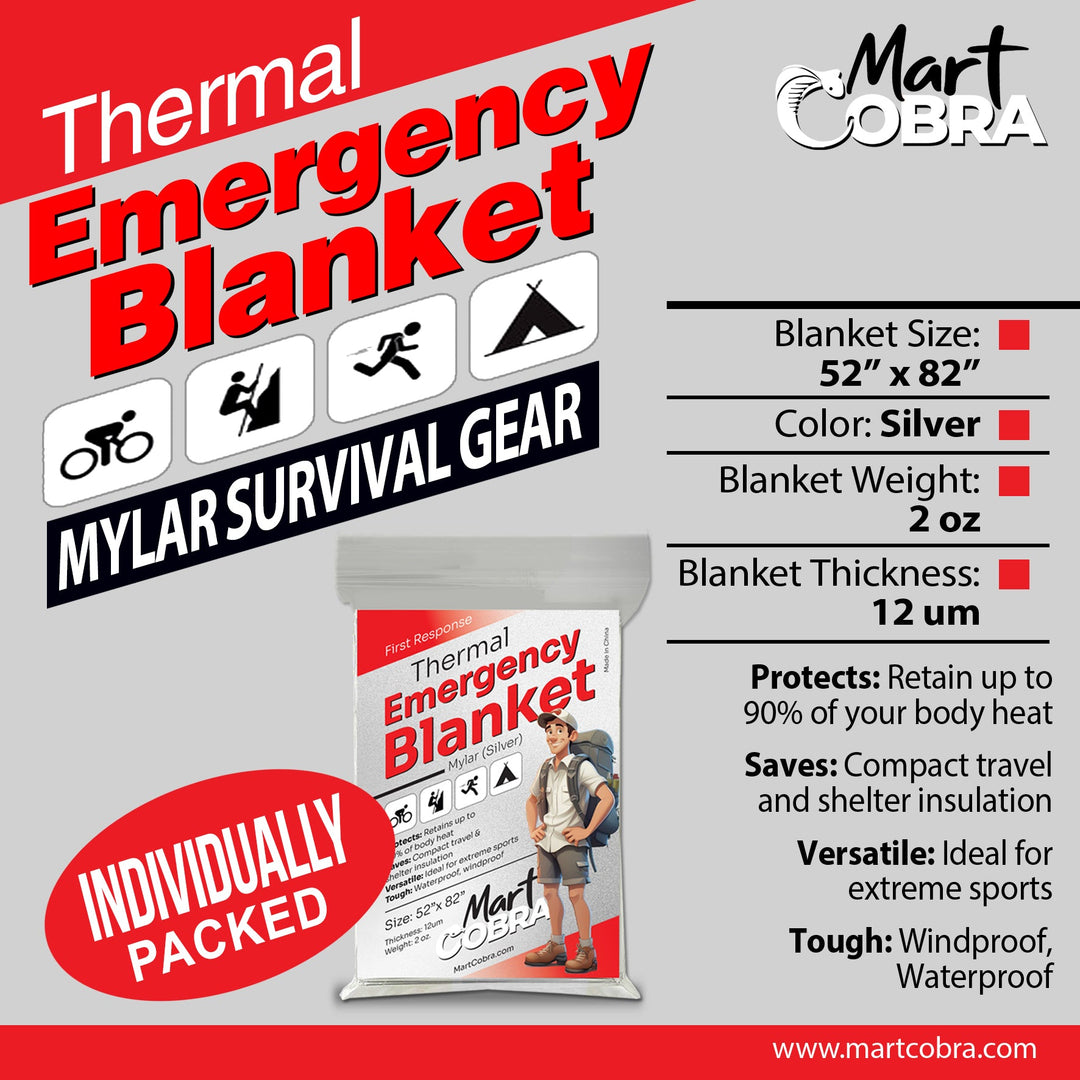
TheMart Cobra Mylar Emergency Blanket is a flat reflective sheet. Its open design makes it compact and flexible for emergency preparedness.
TheMart Cobra Mylar Emergency Sleeping Bag uses anenclosed sack design that surrounds more of the body with fewer exposed edges.
That enclosure can make it easier to keep the reflective material positioned around your body while you're stationary or resting.
It doesn't turn the Mylar material into a temperature-rated sleeping bag, however. Both designs provide very little insulating loft on their own.
Which design makes more sense depends on how you plan to use it. We break down those differences in much more detail in our guide toemergency blankets vs. emergency sleeping bags.
Do Emergency Blankets Work in Freezing Temperatures?
An emergency blanket can still help reduce heat loss when the temperature is below freezing.
That doesn't mean an emergency blanketby itself is sufficient protection from freezing conditions.
As temperatures fall, protection from wind, moisture, and cold surfaces—and adequate insulation from clothing, sleeping equipment, or shelter—becomes increasingly important.
Research into rescue blankets supports their role in preventing heat loss, including in wilderness and prehospital emergencies. But research also emphasizes that passive external warming methods cannot necessarily compensate completely for significant heat loss.
If someone is showing signs of hypothermia or another cold-related medical emergency, an emergency blanket should not be treated as a substitute for appropriate medical care or evacuation.
What About Using an Emergency Blanket in Your Car?
A vehicle is one of the most practical places to store emergency blankets because a breakdown or road closure can leave you waiting unexpectedly in cold weather.
Inside a vehicle, the blanket can supplement the clothing and other emergency supplies you already have available.
Because Mylar blankets are extremely lightweight and compact, keeping enough for multiple passengers requires very little storage space.
But an emergency blanket should be only one component of vehicle preparedness. Water, lighting, first-aid supplies, weather-appropriate clothing, and other equipment can become equally important depending on the situation.
For a more complete list, see our guide towhat you should keep in a car emergency kit.
Frequently Asked Questions
Do emergency blankets actually keep you warm?
Emergency blankets can helpreduce body heat loss, but they don't generate heat. Their effectiveness depends heavily on the environment, your clothing, wind, moisture, ground contact, and how the blanket is positioned.
How many hours does an emergency blanket last?
There is no meaningful number of hours. The blanket doesn't contain a heat source that expires. As long as the material remains intact, it can continue functioning as a reflective and environmental barrier, but whether a person remains warm depends on the surrounding conditions.
Which side of an emergency blanket goes toward your body?
For a typical silver-on-both-sides Mylar emergency blanket, there is no meaningful different "warm side." With two-color rescue blankets, manufacturers may provide product-specific orientation instructions. More important for warmth is reducing exposure to wind and moisture, maintaining insulation, and minimizing unnecessary gaps.
Can you sleep in an emergency blanket?
A flat emergency blanket can be used as an emergency warmth layer while resting, but it isn't an insulated or temperature-rated sleeping bag. Because a flat sheet has open edges and can shift, an enclosed Mylar emergency sleeping bag may be easier to keep positioned around the body.
Do emergency blankets work below freezing?
They can still help reduce heat loss below freezing, but they don't provide enough insulation to make freezing temperatures safe on their own. Appropriate clothing, insulation, shelter, and protection from wind and moisture remain important.
Can an emergency blanket replace a sleeping bag?
No. A thin Mylar emergency blanket provides almost no insulating loft and should not be considered a replacement for an appropriately rated insulated sleeping bag.
The Bottom Line
There is no set number of hours an emergency blanket will keep you warm.
A Mylar emergency blanket doesn't create heat and doesn't have a warming period that eventually expires. Its job is to help slow the loss of heat your body is already producing.
How useful that protection is depends on your environment.
Wind, wet clothing, cold ground, inadequate insulation, and extremely low temperatures can all increase heat loss. That's why an emergency blanket works best as one part of a larger system that includes appropriate clothing, insulation, shelter, and other emergency supplies.
The biggest advantage of a Mylar emergency blanket is that it provides a useful emergency barrier in a package small enough to keep where you might unexpectedly need it.
Key Takeaways
-
There is no fixed number of hours an emergency blanket will keep you warm.
-
Emergency blanketsdon't generate heat; they help reduce body heat loss.
-
Wind, moisture, cold ground, clothing, and environmental temperature all affect how useful an emergency blanket will be.
-
Mylar providesvery little insulating loft, so it doesn't replace proper clothing, shelter, ground insulation, or a temperature-rated sleeping bag.
-
A flat emergency blanket has open edges, while anemergency sleeping bag's enclosed sack design surrounds more of the body.
-
Emergency blankets can still help in freezing conditions, but they should not be treated as sufficient cold-weather protection by themselves.
-
Their compact size makes them particularly practical forvehicle kits, home emergency supplies, hiking packs, and go bags.