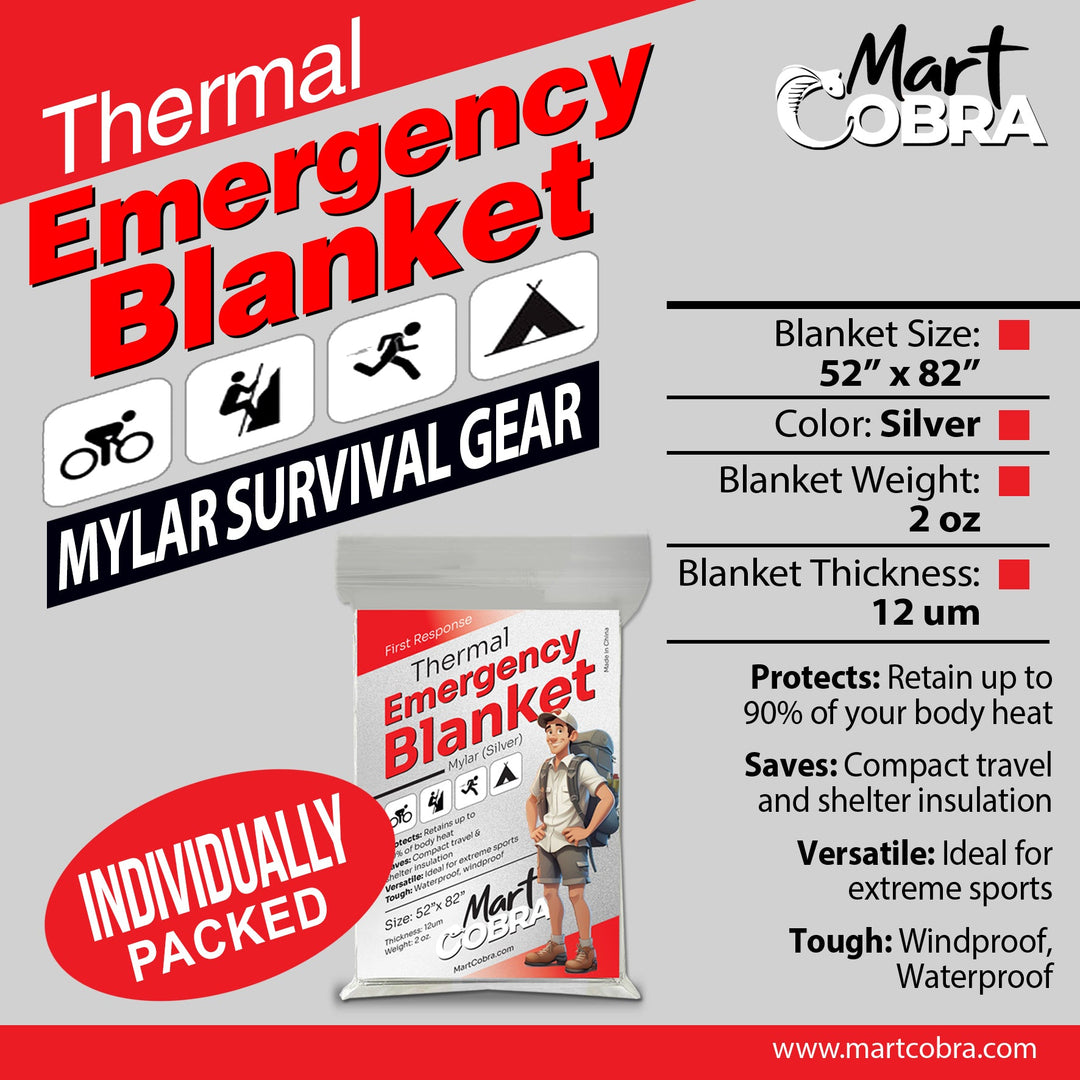
To use an emergency sleeping bag, find shelter from the wind, place insulation beneath your body, keep your clothing as dry as possible, and carefully climb inside the bag with your face uncovered. The reflective material helps reduce heat loss, while the enclosed design provides a barrier against wind and outside moisture.
A Mylar emergency sleeping bag can be a valuable addition to a car emergency kit, hiking backpack, or household survival supplies. However, it does not generate heat or provide the thick insulation of a conventional sleeping bag.
Knowing how to use an emergency sleeping bag correctly can make a meaningful difference during an unexpected cold-weather situation.
How to Use an Emergency Sleeping Bag: 7 Steps
If you're using a Mylar emergency sleeping bag for the first time, follow these steps.
Step 1: Move Out of the Wind
Before opening the bag, find the most sheltered location available.
A vehicle interior, enclosed shelter, or protected area away from direct wind can help reduce exposure.
If you're outdoors, avoid exposed ridgelines and locations where wind or precipitation can reach you directly.
An emergency sleeping bag provides a wind-resistant barrier, but additional shelter can reduce heat loss and make the bag easier to use.
Important: If you are stranded in a vehicle during severe weather, follow local emergency guidance and prioritize safe shelter and communication.
Step 2: Prepare Insulation Beneath Your Body
Before sitting or lying down, place an insulating barrier between yourself and the cold surface.
Useful options include a foam sleeping pad, folded blankets, spare dry clothing, or another suitable insulating material.
In a vehicle, a seat cushion or floor mat may provide some protection, although a proper insulating pad is preferable.
This step is especially important because thin Mylar provides very little insulation against direct contact with cold ground.
It also helps protect the emergency sleeping bag from rocks, branches, and other sharp surfaces.
Step 3: Keep Your Clothing Dry
Check your clothing before getting inside.
Dry insulating layers help trap warm air around your body. Wet clothing can increase heat loss and make cold-weather exposure more dangerous.
If you have dry replacement clothing, change out of wet garments when you can do so safely in a sheltered location.
Keep useful insulating layers, including a warm hat and dry socks, whenever appropriate.
Do not strip off clothing unnecessarily in freezing wind or precipitation.
Step 4: Open the Emergency Sleeping Bag Carefully
Remove the sleeping bag from its storage pouch and gently unfold it.
Identify the opening and make sure the material is not caught on nearby equipment.
Avoid pulling sharply on the seams.
Remove or protect sharp objects that could puncture the film, such as exposed tools, ice traction cleats, or sharp footwear attachments.
For an orange-exterior emergency sleeping bag, the reflective silver surface typically faces inward.
Step 5: Get Inside the Bag
Sit on your prepared insulating surface and carefully slide your feet and legs into the bag.
Continue pulling the bag over your torso and shoulders until most of your body is covered.
Avoid kneeling directly on the material or dragging it across rough ground.
Adjust the opening so it reduces drafts without restricting movement or breathing.
Always keep your nose and mouth outside the bag. Never seal the material around your face.
An enclosed emergency sleeping bag helps maintain coverage more consistently than a loose flat emergency blanket.
Step 6: Combine the Bag With Other Insulation
Once inside, make sure your dry clothing and ground insulation remain in place.
The Mylar bag can help reduce radiant heat loss and limit wind exposure, but it cannot replace insulating layers.
If you have a conventional sleeping bag or additional blankets, use them as part of a suitable cold-weather system.
Be mindful that non-breathable Mylar can trap moisture, particularly when combined with insulated bedding.
The goal is to reduce heat loss while keeping your insulation as dry as possible.
Step 7: Monitor Your Condition and Seek Help
An emergency sleeping bag is a temporary protective measure, not a substitute for rescue, heated shelter, or medical attention.
If you are stranded, contact emergency services when appropriate and communicate your location.
Watch for warning signs of hypothermia, including persistent shivering, exhaustion, confusion, fumbling hands, and slurred speech.
If someone develops signs of hypothermia, seek urgent medical assistance and follow emergency guidance.
Quick reminder: Shelter → Ground Insulation → Dry Clothing → Open Bag → Get Inside → Add Insulation → Monitor and Seek Help.

What Does an Emergency Sleeping Bag Actually Do to Keep You Warm?
A Mylar emergency sleeping bag works differently from a traditional insulated sleeping bag.
Conventional sleeping bags use materials such as synthetic fill or down to trap layers of warm air.
Mylar emergency sleeping bags use a thin reflective surface that can reduce radiant heat transfer.
Their enclosed design also helps limit exposure to moving air and outside moisture.
Does an Emergency Sleeping Bag Generate Heat?
No.
A Mylar emergency sleeping bag does not produce heat.
It helps reduce certain types of heat loss from the warmth your body already generates.
That distinction matters because a reflective bag cannot compensate for prolonged cold exposure without adequate insulation and shelter.
Does Mylar Reflect 90% of Body Heat?
You may see emergency sleeping bags advertised as reflecting up to 90% of body heat.
However, the reflectivity of a material should not be confused with the percentage of total body heat retained in real-world conditions.
Actual performance depends on clothing, air gaps, moisture, wind, ground contact, and the surrounding temperature.
Even highly reflective material cannot eliminate all heat loss.
Is an Emergency Sleeping Bag Warmer Than an Emergency Blanket?
Both products commonly use reflective Mylar material.
The main difference is their construction.
An emergency sleeping bag surrounds much of the body inside an enclosed sack, while a flat emergency blanket must be wrapped and secured.
The enclosed design can make it easier to maintain coverage and reduce drafts.
However, neither product provides the thick insulation of a conventional winter sleeping bag.
For a detailed comparison, readEmergency Blanket vs. Emergency Sleeping Bag: What's the Difference?.
Why Is Ground Insulation So Important?
One of the most common mistakes when using an emergency sleeping bag is lying directly on a cold surface.
Heat can transfer from your body into the ground through conduction.
Because Mylar film is extremely thin, it provides little resistance to this type of heat loss when compressed beneath your body.
A reflective surface alone cannot replace a foam sleeping pad or another insulating barrier.

What Can You Put Under an Emergency Sleeping Bag?
A closed-cell foam sleeping pad is a practical option because it provides insulation and helps protect the bag from damage.
If a sleeping pad is unavailable, consider dry folded blankets, spare clothing, or other suitable materials that create an insulating layer.
Cardboard may offer limited temporary separation from a cold surface, but it should not be considered equivalent to a proper sleeping pad, especially if it becomes wet.
Avoid sharp branches, rocks, and uneven surfaces that could puncture the Mylar.
Can You Use an Emergency Sleeping Bag Directly on Snow?
A thin Mylar emergency sleeping bag should not be relied upon directly on snow.
Snow and frozen ground can draw heat away from the body, and the film provides almost no cushioning or conventional insulation.
Use a suitable insulating pad and seek better shelter whenever possible.
If you're preparing for winter conditions, our guide toDo Emergency Blankets Work in Freezing Temperatures? explains why reflective materials need to be combined with other protection.
Should You Wear Clothes Inside an Emergency Sleeping Bag?
Yes. In most cold-weather situations, dry insulating clothing should remain on while using a Mylar emergency sleeping bag.
A common misunderstanding is that reflective material works best directly against bare skin.
In practice, removing useful dry insulation can increase heat loss.
Wear appropriate layers that help trap warm air around your body.
A warm hat, dry socks, and insulated clothing can all contribute to a more effective emergency setup.
What If Your Clothes Are Wet?
Wet clothing can increase heat loss and contribute to hypothermia.
If you have dry replacements and can change safely, remove wet garments and put on dry layers.
If no dry clothing is available, prioritize reaching shelter, reducing wind exposure, and getting assistance.
Avoid prolonged exposure while attempting to change clothes outdoors.
Can You Put a Blanket Inside an Emergency Sleeping Bag?
Yes, if there is sufficient room and the combination does not restrict movement or breathing.
A dry blanket can provide additional insulation.
However, Mylar is generally not breathable, so monitor moisture buildup.
If the blanket becomes damp, its insulating performance may decrease.
For more information on reflective blankets, seeHow Long Do Emergency Blankets Keep You Warm?.
How Do You Prevent Condensation Inside an Emergency Sleeping Bag?
Condensation is an important limitation of Mylar emergency sleeping bags.
Because the material does not readily allow water vapor to pass through, moisture from perspiration can accumulate inside.
This may leave clothing damp, particularly during extended use.
Keep Your Face Outside the Opening
Never pull the bag over your nose and mouth.
Keep the opening positioned so you can breathe freely.
This also helps prevent exhaled moisture from collecting inside the bag.
Avoid Overheating
If you become excessively warm and begin sweating, moisture can accumulate against your clothing.
Adjust your layers and the bag opening as conditions safely allow.
The objective is to remain warm without soaking your insulating clothing.
Allow Ventilation When Appropriate
A small amount of ventilation near the opening may help manage moisture.
However, opening the bag too widely in strong wind can increase heat loss.
Balance ventilation with protection from the surrounding conditions.
Dry the Bag Before Repacking
After use, inspect the material and allow it to dry completely before storing it.
For more detailed instructions, seeAre Emergency Sleeping Bags Reusable? How Many Times Can You Use One?.
Can You Use an Emergency Sleeping Bag in Freezing Temperatures?
Yes, a Mylar emergency sleeping bag can provide some protection in freezing temperatures, butit should not be treated as a complete cold-weather sleeping system.
Its effectiveness depends on the surrounding conditions and the insulation used with it.
For example, a person wearing dry winter clothing, resting on an insulated pad, and sheltered from the wind has more protection than someone lying directly on frozen ground inside a Mylar bag.
There is no single outdoor temperature at which every emergency sleeping bag suddenly stops working.
Likewise, a thin Mylar bag should not be assigned a reliable comfort rating simply because its reflective material performs well in laboratory conditions.
Can You Sleep Overnight in an Emergency Sleeping Bag?
An emergency sleeping bag may provide temporary protection during an unexpected overnight situation.
However, it is not a substitute for a properly rated insulated sleeping bag when planning to sleep outdoors in cold weather.
Extended exposure increases concerns about condensation, inadequate insulation, and hypothermia.
If an overnight stay is unavoidable, prioritize shelter, ground insulation, dry clothing, communication, and assistance.
Common Mistakes When Using an Emergency Sleeping Bag
Even a well-designed emergency sleeping bag has limitations.
Avoid these common mistakes:
-
Waiting too long to seek shelter. Use protective equipment early rather than allowing cold exposure to worsen.
-
Lying directly on cold ground. Thin Mylar does not replace an insulating sleeping pad.
-
Removing dry insulating clothing. Keep useful layers on rather than relying on the reflective film alone.
-
Covering your face. Always maintain an unobstructed breathing opening.
-
Ignoring condensation. Moisture buildup can leave clothing and insulation damp.
-
Puncturing the material. Keep sharp equipment and rough surfaces away from the bag.
-
Assuming the bag has a winter temperature rating. Reflective emergency equipment is not equivalent to a tested insulated sleeping bag.
-
Failing to seek help. A Mylar bag is emergency equipment, not a treatment for hypothermia.
What Are the Warning Signs of Hypothermia?
Hypothermia occurs when the body loses heat faster than it can maintain a safe core temperature.
It can develop during very cold weather, but wet clothing and prolonged exposure can also create dangerous conditions at temperatures above freezing.
According to the Centers for Disease Control and Prevention, warning signs in adults include shivering, exhaustion, confusion, fumbling hands, memory loss, slurred speech, and drowsiness.
A person with worsening hypothermia may eventually stop shivering.
Suspected hypothermia requires urgent medical attention. Move the person to a warmer, sheltered environment if it is safe to do so, remove wet clothing when possible, and use dry insulating layers while waiting for help.
Do not assume an emergency sleeping bag alone can reverse hypothermia.
For authoritative guidance, see theCDC's information on preventing hypothermia.
Which Emergency Sleeping Bag Should You Keep in Your Kit?
When choosing an emergency sleeping bag, consider whether it is large enough for the intended user, easy to store, and practical to deploy during an emergency.
Useful features include a reflective interior, weather-resistant material, an enclosed design, and a compact storage pouch.
A highly visible exterior may also help make emergency equipment easier to spot.
TheMart Cobra Emergency Sleeping Bag features a high-visibility orange exterior and reflective silver interior.
It measures approximately84 × 36 inches, weighs less than five ounces, and folds into a compact storage pouch.
Its lightweight construction makes it convenient for vehicle emergency kits, backpacks, and household preparedness supplies.
As with any Mylar emergency sleeping bag, it should be combined with appropriate clothing, ground insulation, and shelter rather than used as a replacement for conventional insulated sleeping equipment.
You can also view theMart Cobra Emergency Sleeping Bag product page.
For help preparing supplies for unexpected roadside situations, readWhat Should You Keep in a Car Emergency Kit?.
Frequently Asked Questions
Which Side of an Emergency Sleeping Bag Faces In?
For a Mylar emergency sleeping bag with an orange exterior and silver reflective interior, the silver side faces inward. Follow the manufacturer's instructions for your specific product.
Should You Get Into an Emergency Sleeping Bag Before You Feel Cold?
Use protective equipment early when conditions are becoming unsafe. Do not wait for severe shivering, confusion, or exhaustion before seeking shelter and warmth.
Can an Emergency Sleeping Bag Keep You Warm Without a Blanket?
It can help reduce heat loss, but it provides very little conventional insulation. Dry clothing, shelter, and ground insulation remain important.
Can You Use an Emergency Sleeping Bag Inside a Car?
Yes. A Mylar emergency sleeping bag may provide an additional protective layer during a roadside emergency. Use it alongside appropriate clothing and other emergency supplies, and follow winter vehicle safety guidance.
Can You Put a Sleeping Bag Inside an Emergency Sleeping Bag?
The two may be combined in some situations, but enclosing insulated bedding in non-breathable Mylar can create condensation problems. Do not assume the combination produces a specific temperature-rating improvement.
Are Emergency Sleeping Bags Waterproof?
Mylar film generally resists liquid water, but the overall protection of a finished bag depends on its seams, openings, and condition. A sleeping bag should not be treated as a substitute for waterproof shelter.
Can You Reuse an Emergency Sleeping Bag After Opening It?
Many Mylar emergency sleeping bags can be reused if they remain intact, clean, and dry. Follow the manufacturer's instructions and inspect the bag before storing it.
Key Takeaways
-
Use an emergency sleeping bag with shelter, dry clothing, and ground insulation.
-
Mylar can help reduce radiant heat loss but does not generate warmth.
-
Place an insulating barrier underneath your body before getting inside.
-
Keep your face uncovered and maintain a clear breathing opening.
-
Dry insulating clothing is important; wet clothing can accelerate heat loss.
-
Monitor condensation because Mylar is generally not breathable.
-
Do not assume a Mylar emergency sleeping bag has the same temperature rating as an insulated camping sleeping bag.
-
Seek urgent medical attention for suspected hypothermia.
Final answer: The best way to use an emergency sleeping bag is as one part of a complete cold-weather protection system. Find shelter, insulate yourself from the ground, wear dry layers, and carefully enter the reflective bag while keeping your face clear. Used correctly, a Mylar emergency sleeping bag can provide valuable temporary protection during unexpected cold-weather emergencies.